

When I was young and invited to my friend Lena’s future husband’s parties, I was rather bored there and thought why these painters were so uninteresting and voiceless. Usually, we girls discussed literature, movies, art, and were noisy. Our friends, painters, were quieter in our company. Also, I remember Nelia, who at that time became passionately mad about yoga, and was standing on her head against the wall of their studio room, propped up by her feet against the low ceiling. The problem with that room was what fascinated us.
All of us at these parties in that room, besides Lena’s boyfriend, Volodia, were living in Leningrad without registration, e. i., illegally. We rented the rooms in different parts of the city, but those painters, two of them, besides Lena’s boyfriend, lived in his studio, also against the law. All of them were graduates of the famous Academy of Art, from which the most famous painters, such as Brullov (Last Day of Pompeii), Aivazovsky (The Ninth Roller, marine artist), or Repin (Ivan the Terrible Killed his Son) graduated at different times in history, and now - these boys. We saw nothing interesting in them or their paintings around us.
But about that tricky question of the room, we were curious. Volodia, officially a more progressive, more promising talent, and Leningradets (with registration because he was born in Leningrad) got this free room in the attic of the five-story building to work on his painting from the Leningrad Obkom (Communist district). His two friends, without any means of living, precariously existed in this room, in which they couldn’t put even their beds or clothes. The room had only one sofa, two chairs, two easels, and a long table for Volodia's painting supplies. He was prohibited from living in that room, only to paint. The militia could check any day or night to see how the room was used and deprive a painter of his studio if it was used for a living. And more troubles for his two friends for non-registration in Leningrad. This was the Soviet life for our young artists.
Our country lived through the so-called Thaw, from the beginning of the 1960s, when the political and cultural life became easier and more open, and the Soviet avant-garde painters, so -called non-conformists, even took liberties to come out of the underground and show their work. Their most famous exhibition was held in 1962 at Moscow Manezh, an official exhibition building. Khruschev visited the exhibition and became angry. He swore at the painters in the dirtiest Russian you could find for their work. How could the Soviet painters decline the only method of Soviet Art—Social Realism —and show some heretical dab like abstraction or religious motives when religion was prohibited from the days of the Revolution?!, scrimed our lieder. Especially, he was angry at Ernst Neizvestnyi (Unknown), a talented sculptor, from whom Khruschev’s children ordered a sculpture of their father for his grave after the leader's death. But at that time, the leader of the USSR reduced all exhibition participants to poverty-stricken status, prohibiting the state from buying their work and taking away their state-given studios. Could the artists paint or sculpt in their communal apartments, small rooms where the whole family could live? And only the State ordered work and paid for the work to an artist.
Euthoria of Thaw disappeared. Artists went underground again.
But in the 1970s, the country's religious awakening began, and the government became deeply worried. I remember that during Easter Night, they showed foreign movies in the movie theaters to distract people from attending church services.
In September of 1974, Moscow non-conformists organized an outdoor exhibition on vacant land in the Beliayevo district. The bravest of them, Otary Kandaurov, Haritonov, Sitnikov, Ernst Neizvestnyi exhibit their work on the banned religious topics despite the government’s prohibitions. What did the Soviet authorities do with that exhibition?
Bulldozed it. Arrested the painters. But the painters, knowing what terrible could happen, invited foreign journalists to the exhibition, and the West became very supportive of the Soviet painters. The painters were freed, and mutual collaboration between West and East began. It gave nonconformist painters the possibility of surviving without state support; they made money in pernicious ways, fearing the penalty, but they still sold their work in the West.
In 1975, a group of Leningrad artists organized Alef- an association of artists, interested in the new ways of expressing themselves in religious themes, studying the history of religions, Judaism, and Christianity. E. Abezganz, D. Lion, and G. Bruskin reflected their interest in Holy Writ in their paintings.
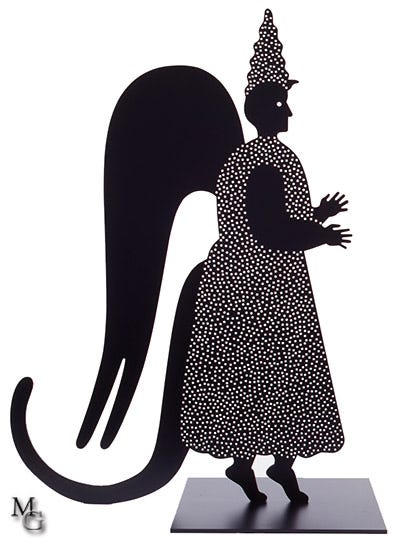
G.Bruskin. Black Angel
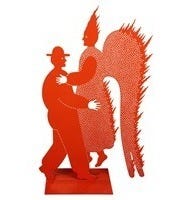
G. Bruskin. Joseph and Angel
enamel on steel
In the same year, 1975, Moscow nonconformist painters, despite their “Bulldozer” exhibition the previous year, exhibited their work at the semiofficial hall of Graphic’s Gorkom on Malaya Gruzinskaya Street. After the loud scandal last year, the government was afraid to close that exhibition. The group of artists belonged to a group whose philosophy was isoterism and metathesics in their religious art, as their leader, Otari Kandaurov, declared. It is admirable that, at the time of a banned religion, they dared to make Christianity the main subject of their art.
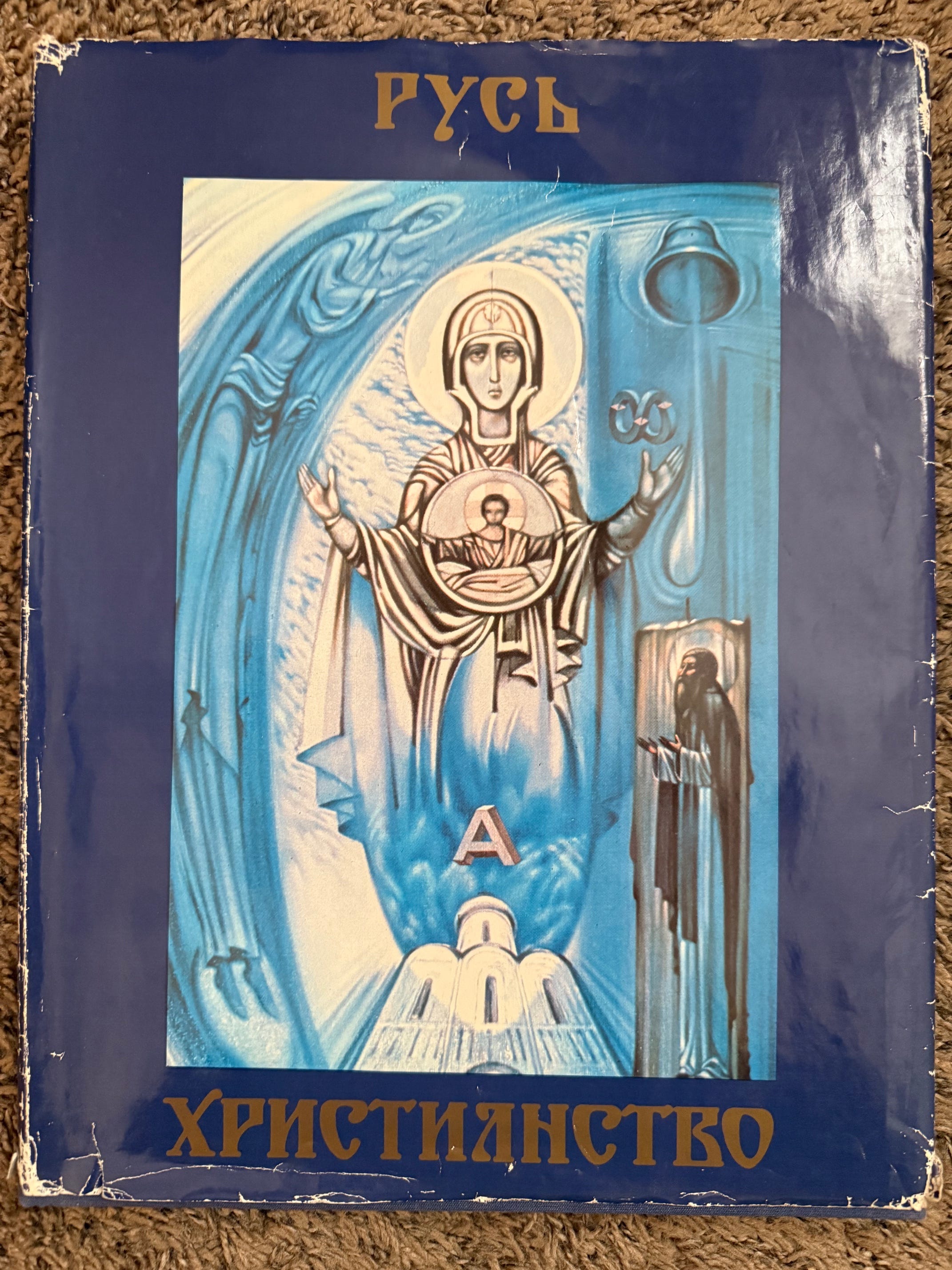
Now, when religion is open to everybody in modern Russia, Otary Kandaurov published a large volume of the old and new painters of this group, which I offer for your familiarization: Old Russia. Christianity.
O. Kandaurov. Liturgy. Oil on canvas, 1987
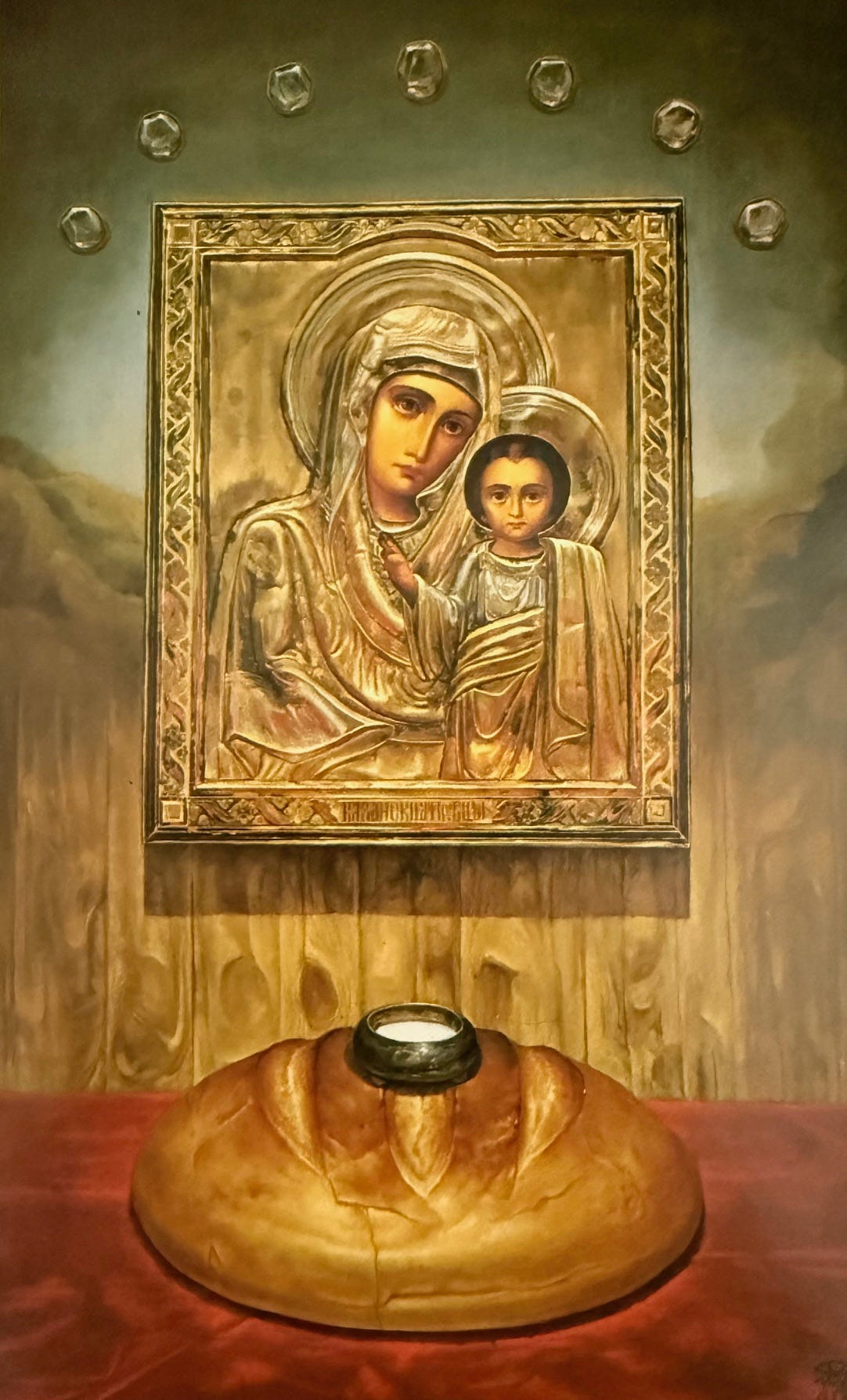
A. GIDULIANOV. BREAD and SALT, oil on hardboard, 1987
Volume makes a great impression of the combination of old Russian Christianity in the Rublev’s Icon painting and the modern painting of former Soviet non-conformists, like A. Gudulianov or A. Polenov. By the way, Bread and salt-- an old Russian custom to welcome guests to a Russian house.
The album features 50 Soviet non-conformist artists with diverse styles and interpretations of the religious theme.
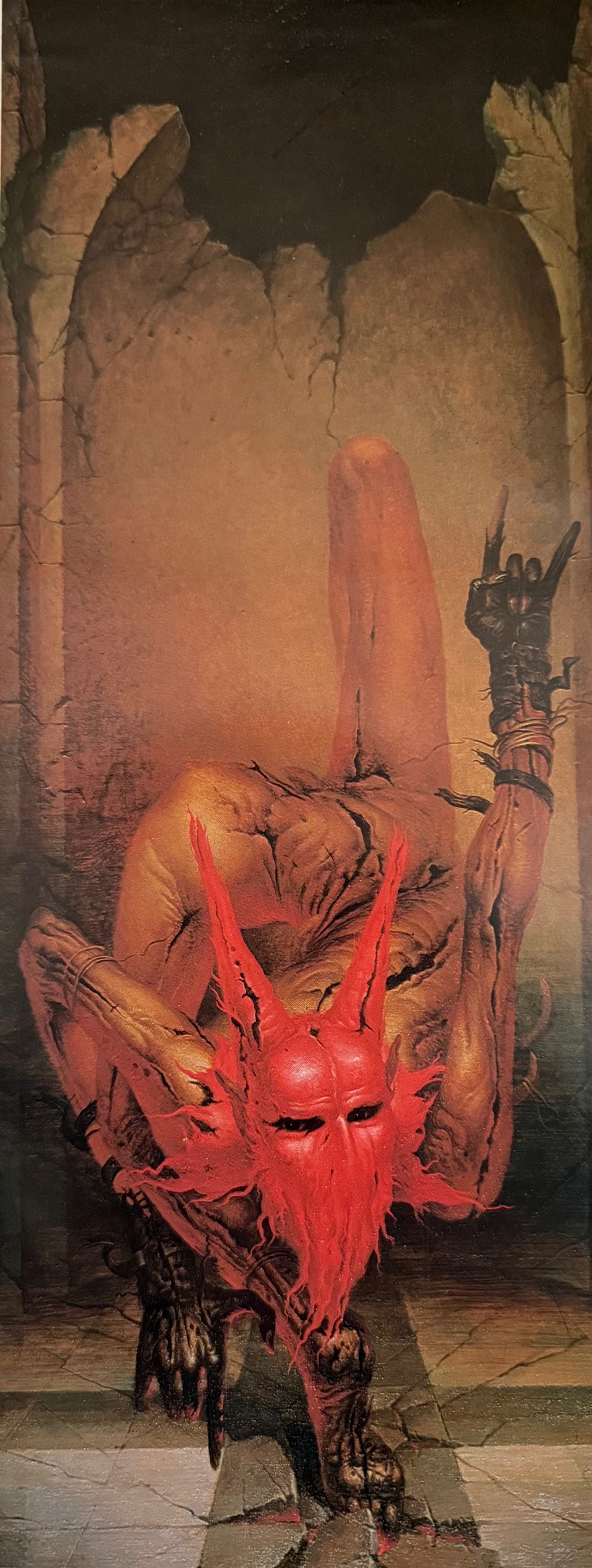
V. PROVOTOROV. BLASPHEMY. (SEVEN DEADLY SINS), oil on canvas, 1987-88.
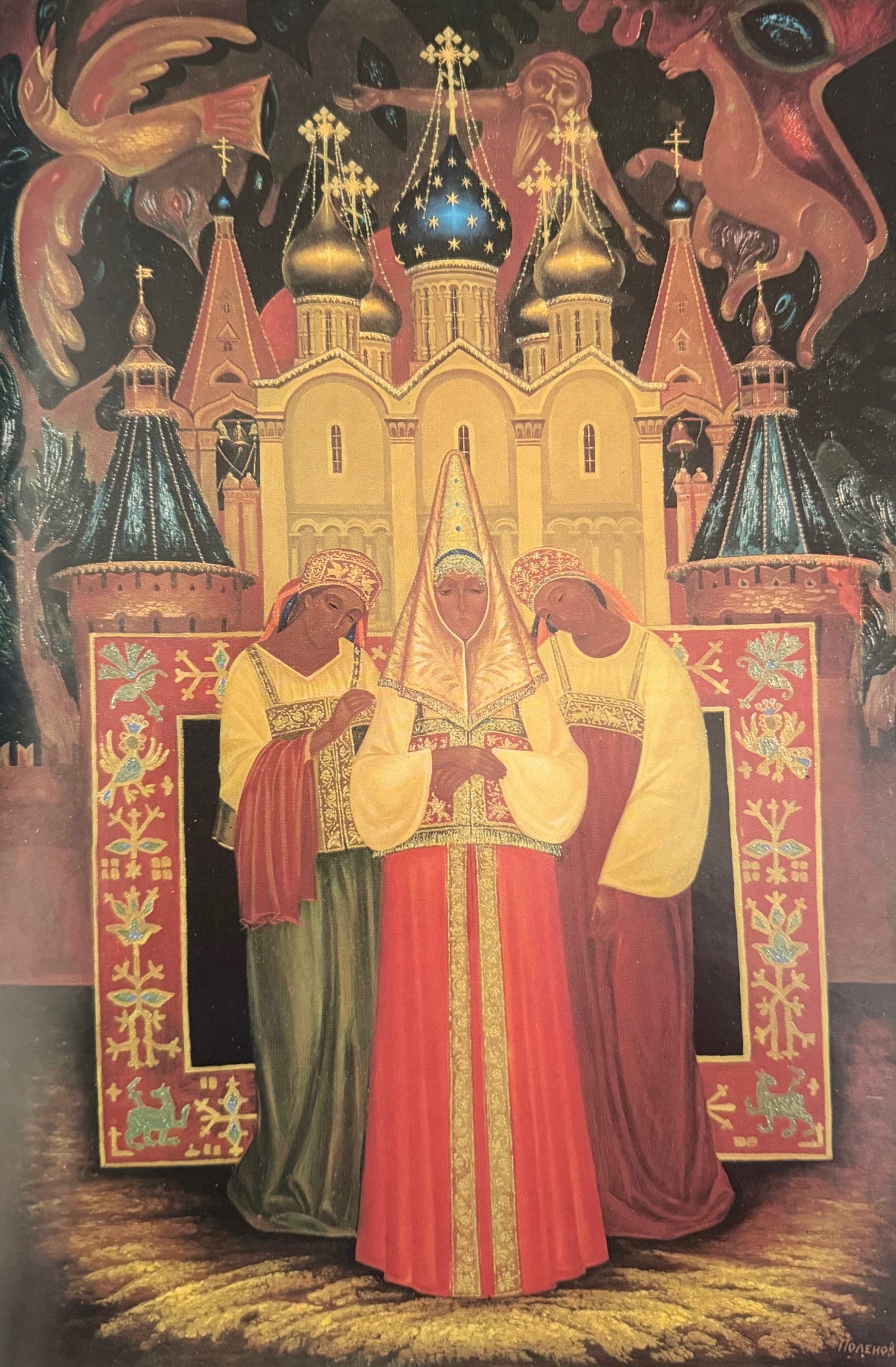
A. POLENOV. PRESENCE, oil on canvas, 1988.
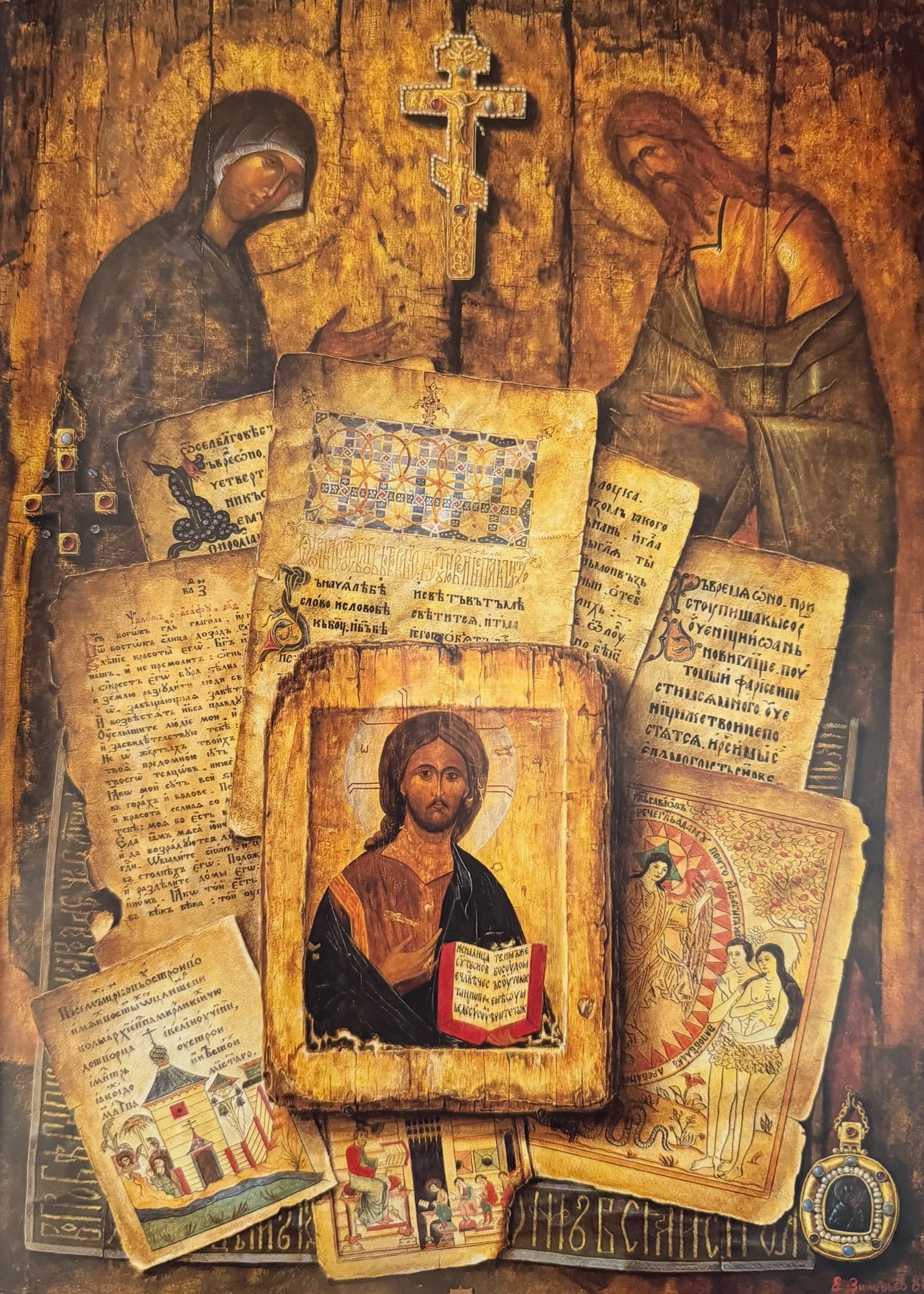
E. ZINOVIEV. THE SYMBOLS of the RUSSIAN ORTHODOX CHURCH. OIL ON CANVAS, 1987
If you are interested in seeing more paintings from this book, I would be glad to provide you with additional photocopies: РУСЬ. ХРИСТИАНСТВО. АВТОР- СОСТАВИТЕЛЬ О. КАНДАУРОВ. МОСКВА. ТЕРРА 1991
RUSSIA and CHRISTIANITY. AUTHOR and COMPILER O. KANDAUROV. MOSCOW. PUBLISHER CENTER “TERRA”, 1991
My Thanks to Guigamesh, K. Asimonov, S. Wotring, Simon Knight, Dostoevsky's inquiries, UN7OU, L. Von Lo-Debar, and 20 others for their interest in the Soviet artists. Also, Michael Mortimer, and my faraway, lovely friend, Mona.
Does icon painting require traditionally made brushes and paints, or can the artists use modern tools?
A lot of wildly different religious works of art in your book, Larisa, they're amazing!