

In that time, I was a guest on Earth.
I was christened with the name— Anna,
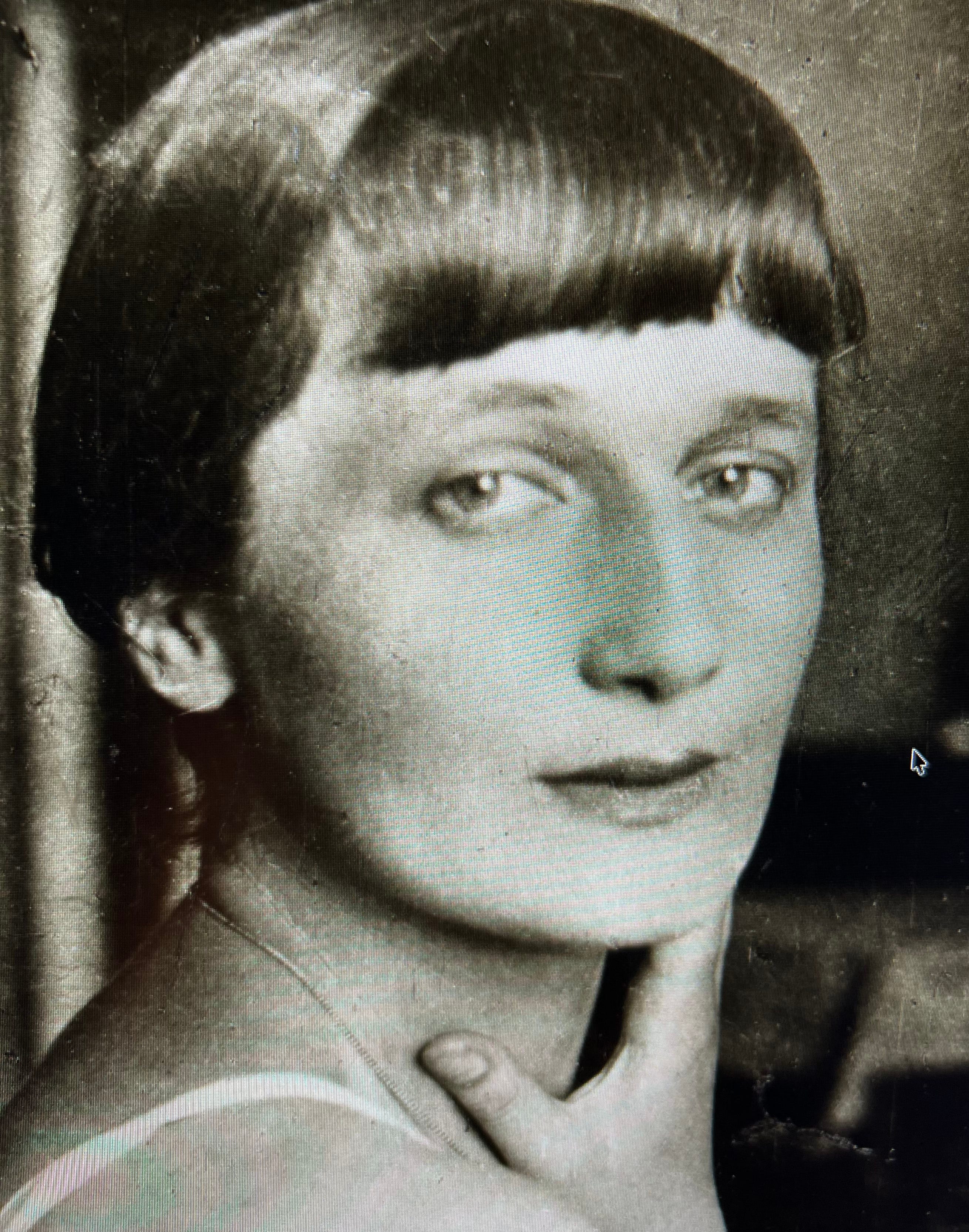
The sweetest for human lips and ears.
В то время я гостила на земле.
Мне дали имя при крещенье— Анна,
Сладчайшее для губ людских и слуха.
1917. The Russian Revolution. Life under a new political regime in Russia and — in Petrograd. Nobody knows what will be tomorrow, where to buy bread, how to find wood for the fireplace, and whether there will be electricity at home or on the streets, which is rare, but armed soldiers are everywhere on the sparsely populated Petrograd streets. And life is just a matter of survival. Good that Anna’s child is with her mother-in-law, at Bezhetsk, a small town in Tula. She sent them 25 rubles every month, but visited her son only two times: in 1921 and 1925. In 1930, after graduating from school, he came to Leningrad to enter university, but as the son of an enemy of the people, he was denied admission.
And her former life now reminds her how happy she was, not even understanding it:
I was daring, mean, and merry,
And didn’t know, it was — happiness…
A я была дерзкой, злой, и веселой,
И вовсе не знала, что это — счастье…
But while her friends ran away from the country, Akhmatova preferred to stay with her homeland:
I heard the voice. It was called consolingly,
And spoke: Come here,
Leave your land, deaf and sinful,
Leave Russia forever.
*************
But indifferently and calmly
I closed my ears,
Not to offend my sorrowful spirit
By this unworthy speech.
Could she even imagine what was awaiting her? Aleksandr Blok, this aristocrat of Russian poetry, preferred to stay; her close friend, Mandelstam, stayed; Gumiliov decided to return to Bolshevik Russia from Paris. Blok, believing that Revolution brings freedom and equal rights to the poor Russian people, was soon shocked by the cruelty of the new power and died from hunger and nervous disorder; Gumiliov was shot, and Mandelstam was later tortured to madness and death in the camp. What was written in her Soviet fate?
In Petrograd, Akhmatova stands in line for hours to get the ration of bread and salted herrings, given to her soon-to-be husband, Vladimir Shileiko, by the new publishing Bolshevik house, which, fortunately, Gorky had organized, called World Literature. Vladimir Shileiko works there as the country's best and only orientalist-assiriologist. She is waiting for Gumiliov to return from France so she can get a divorce and marry Shileiko. His monthly salary is enough for 1/2 day. (P. Luknitsky. Meetings with Anna Akhmatova) They lived in the Southern outbuilding of the Sheremet’yev Palace, Fontanka Embankment 34, from the fall of 1918 to the fall of 1921. About Shileiko Akhmatova tells:
You are always mysterious and new,
I am more obedient to you every day.
But your love, oh, my severe friend, is
The test to me by the iron and fire.
You forbid me to sing and smile,
And to pray, you forbade me a long time ago.
But I only wish not to part with you
The rest is all the same, I don’t mind!
So, I am alian to earth and sky,
I live and don’t sing anymore,
As you took my free soul away
From hell and from paradise.
Ты всегда таинственный и новый,
Я тебе послушней с каждым днем.
Но любовь твоя, о друг суровый,
Испытание железом и огнем.
Запрещаешь петь и улыбаться,
А молиться запретил давно.
Только б мне с тобою не расстаться,
Остальное все равно!
Так, земле и небесам чужая,
Я живу и больше не пою,
Словно ты у ада и у рая
Отнял душу вольную мою.
December 1917
The style of this poem is unusually heavy for Akhmatova; her singing, her lightness, have vanished from her poetry; even the title of her cycle about the relationship with Shileiko, The Black Dream, suggests that the poet is suffering and couldn’t bear her promise not to part with her tormentor. (Shileiko, before the Revolution, was an educator of Count Sheremet’ev’s children; from here is the address of his fligel.’)
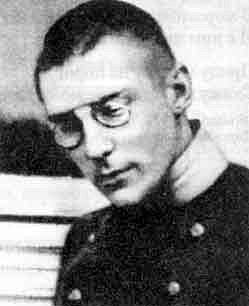
V. Shileiko, 1910s
Anna Ahmatova told about her marriage to Shileiko to her young friend, Anatoliy Naiman, who was her secretary in her last years: Both Lozinsky and Gumilyov believed religiously in the genius of the third (Shileiko), and, what is absolutely unforgivable, in his holiness… Egyptian! Egyptian! ...— On two voices. Well, I agreed… By the way, Shileiko gave her the nickname Akuma- mean spirit -in Japanese, and this Akuma went with her through all her life.
She writes about her marriage to Shileiko: I went to him myself…Felt myself so black, thought, cleansing will come… Luknitsky left us his opinion about this marriage: Shileiko tormented her, held her as in prison, under lock and key, didn’t let her go out,… on her lips, the word “sadist” quavered, but she didn’t pronounce it aloud. When she lived with V. Sh., constantly, for hours, for a long time, she wrote his dictations (translated him from the list)-his works on Assyria, Babylonia, Egypt.
She left Shileiko in 1921. It was the hungriest and most disturbing time of her life with a man. But A. Neiman remembers that she talked about this marriage as if about a dark misunderstanding, without rancor, rather, gayly… and not by the tone of the rage or despair of her poems, addressed to him:
From Your mysterious love,
I scream from pain.
[I[Became yellow and in fits.
Hardly drugging my feet.
Oт любви твоей загадочной,
Как от боли в крик кричу,
Стала желтой и припадочной
Еле ноги волочу.
Of course, she could let herself be gaily, since 40 years of her awful life with Shileiko, but his ironic prophecy was realized: When you get the ermine cloak from Oxford University, remember me in your prayers. Yes, she got her the ermine cloak from Oxford University at the end of her life.
But in 1921, when she ran from Shileiko, she had no place of her own, no money to rent even a room, so she moved in with her friend Ol’ga Glebova-Sudeikina and her lover, the composer Arthur Luriye.
Nadezhda Mandelstam, in her second book, wrote about the period from the 1900s until the 1930s, when communists cleaned out everything they didn’t like, as a time of full muddle, from one point of view, and freedom, from another. And huge instability, especially in the first years after the Revolution. The high-ranking Bolshevik, A. Kollontai, created the theory of sex as drinking a glass of water to slake thirst. In sexual life was a regular arrangement to have several lovers, or a man had two wives; to register the marriage was not necessary, and Akhmatova’s friend, Gal’perina-Os’merkina, remembers that when she came to register her marriage with Os’merkin at the office, she became pale, seeing a placard on the wall: Before the registration of marriage, visit a venereologist.
Akhmatova moved to her friend Ol’ga Glebova-Sudeikina and her lover, composer Arthur Luriye’s apartment on Vasiliy Island. It was easy to infer from N. Mandelstam’s writing that Akhmatova was in love with her friend Ol’ga, and the other friend suggested it was a love triangle. Luriye asked both women to emigrate together, but, as we know, Akhmatova refused emigration, preferring her ruined country. Beautiful actress and dancer Olechka Sudeikina is the addressee of several Akkhmavtova’s poems.
Voice of Memory:
What do you see, looking wanly at the wall
At the hour of the late dawn?
**********
Do you see the Tsar Village’s huge park,
Where did the alarm cross your way?
Or you see the other at your knees
Who left your captivity for the white death?
Ahmatova mentioned a rejection by an officer, Ol'ga, who committed suicide because of it, in another, later poem, Poem without Hero.
In 1921, her last book, Anno Domini, was published and sold right away, but after that, she wasn’t published again until 1940. Only her poems rarely appeared in some literary magazines.
1922 was a happy year for Anna Akhmatova. She fell in love with and was loved by a very interesting, intelligent man, Nikolai Nikolaevich Punin, a professor at the Leningrad Academy of Arts and Leningrad University, a well-known art historian.
Unfortunately, he was married and had a little daughter, and it was a big problem in their lives, aggravated by Akhmatova’s lack of a place to live after she left Shileiko. She rented a room or lived with friends at different times (this problem is well known to me). Punin had a large apartment of four rooms in the same Sheremet’evsky Palace, where Shileiko had once lived, but in different wings of the palace, on the third floor, given to him by the Academy of Art, where, in March 1923, Akhmatova, despite of the unseemliness of the situation, had to move in. She became Punin’s civil wife. He wrote to his wife that he needed to be with Anna Akhmatova, and his wife, with their four-year-old daughter, had to accept the situation. He wrote to Akhmatova: I want to live by the excitement and rhythm of your blood, by your thought and your taste, by all your day and your sleepless night.
He never divorced his first wife; she simply moved to another room, and when the love affair ended after 15 years of civil marriage, Akhmatova offered his first wife to move back to their bedroom and settled in her room. Exchange of husband and rooms was completed. Akhmatova lived in this room until 1952, with intervals. Her son lived there also when he came back from the geological expedition on Baikal. (I write about this situation only because this apartment has become famous now as the literary museum of Anna Akhmatova. I visited the museum once, when I came to Petersburg from the US. It opened during the period of Glasnost’.)
Civil marriage was widespread in New Russia. All of them met for dinner in the dining room. His former wife, an emergency room doctor, sometimes invited her young boyfriend, also an emergency room doctor, to dinner, as Galperina-Os’merkina described the dinner where she and her husband, a good Akhmatova friend, were present. By the way, Os’merkin’s portrait of Ahmatova adorns her museum room.
Anna Akhmatova addressed many poems to N. Punin. It was a happy relationship for many years. One of her first poems describing time, when he approached her:
Fantastic autumn built the high cupola,
It was ordered that the clouds not darken that cupola.
And people were surprised: September is passing,
But where did they fall through, the icy, wet days?
****************
It was staffy from dawns, unbearable, demonic, and scarlet,
The sun was like a rebel, entering a capital,
And the vernal autumn so greedily snuggled up to it,
That it seemed —this moment whitens transparent snowdrop
At this moment, you appeared at my porch.
1922
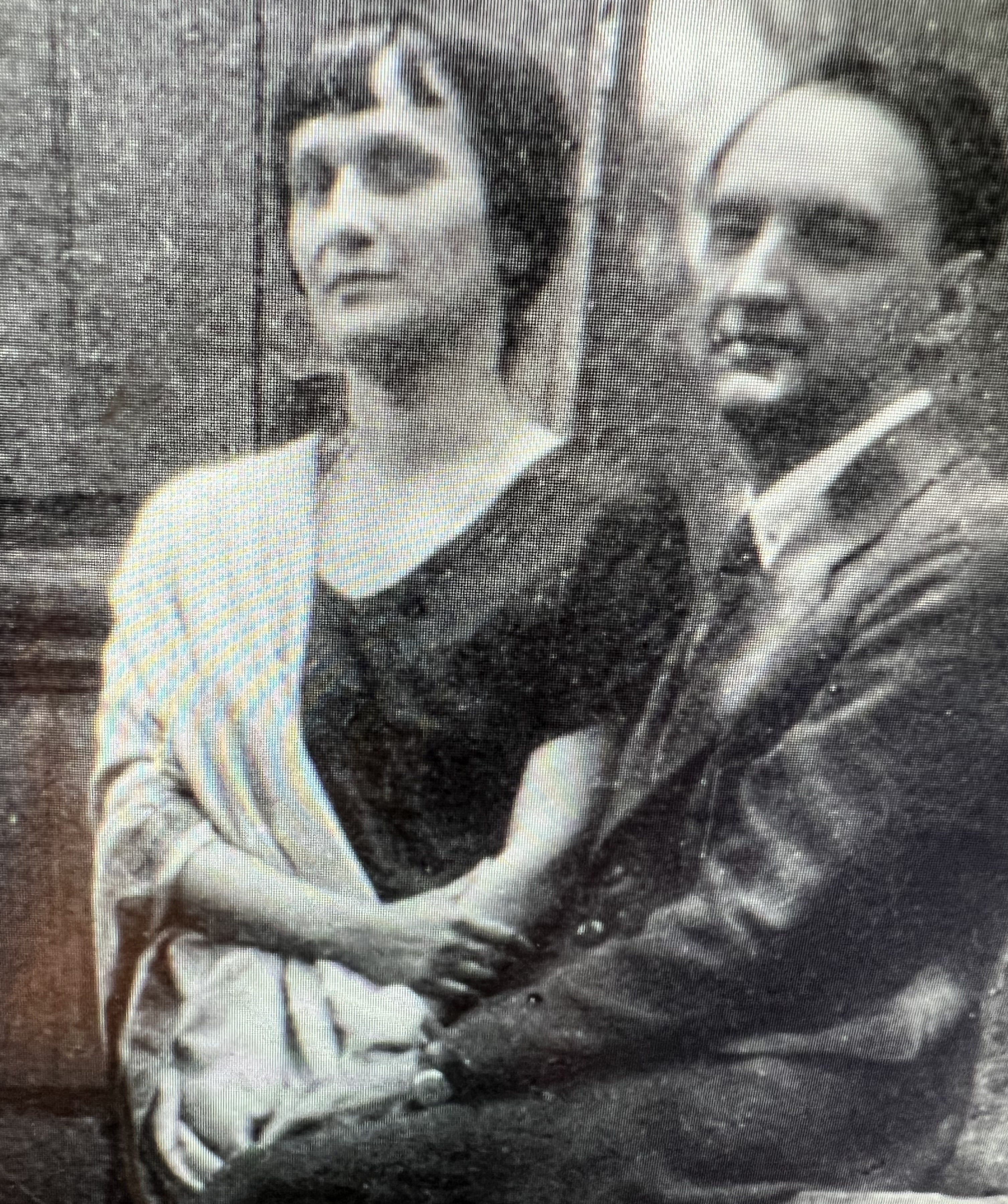
Her poems became the diary of her love affair with Punin. From the day he appeared before her, which became unbelievably sunny and hot despite the usually cold, rainy September day in Petrograd, to the terrible end, when she finally drinks for the ruined home, for her mean life, we read her life in her poetical interpretation. But between the happy days and the Last Toast, there is a sequence of events, including his arrests—[They] took you away at dawn,… reflected in her lyrical diary —her poems.
She was happy, meeting the New Year of 1923 eve together among their friends, and Punin pronounced his toast to her:
And my friend, looking at me
And remembering god knows what,
Exclaimed: And I am to her songs,
In which we all live!
1923
In 1932, they still made the impression of the happy couple in remembrance of their friend, V. Petrov: Evidently, Anna Akhmatova was happy, at the beginning of the 30s, they made the impression of the tender, loving couple, almost as newly-weds.
But in 1933 — a break. She found out that he was in love with a young woman (who was married and had a child), his dissertant, Antonina Izergina. About it, Akhmatova told her closest friend, Lidiya Chukovsky:
First, I knew nothing, then I knew, but was quiet, then I went to live with the Sreznevskys. N.N. threatened that he would kill Sreznevskys if I continued living there, implored, cried, and so on… I moved to Tsar Village, lived in a room there with the dying Valentina Andreevna, and cared for her. He came there. I had nothing to do with him. He swore that with Tota (Antonina), everything is over, and I returned… Some time later, I was going to the railroad station on Nevsky Prospect … and met them, he held her hand.
But between the time she returned and the time she learned about the continuation of his infidelity, terrible things happened.
While their family life continued, and Lev, at last, was a student at the university, one October night in 1935, Nikolai Punin, professor of art, and Lev Gumiliov, a university student, were arrested. For both, it was their second arrest. For Punin, the first was in 1921, when Nikolai Gumiliov was also arrested and shot together with 33 others, but Punin was freed. Maybe his former reputation as the Commissar of Arts during 1918-1920 helped him in his release. Lev was arrested in 1930 but released after nine days.
The next morning after their night arrest, Akhmatova, in her mad condition, as remembered Elena Bulgakova, came to them in Moscow to petition on Punin's and her son's behalf, pleading with Stalin for their release. The Bulgakovs and she together composed the letter to Stalin; then, through L. Seifulina and B. Pil’niak, close to Poskriobyshev, Stalin’s secretary and “his shadow”, the letter reached Stalin, and on the third day, both husband and son were released. Punin was very proud of Akhmatova’s influence on Stalin himself. (By the way, Stalin’s daughter Svetlana loved her poetry and talked about it to her father.) So this time (and his last time), Punin was lucky again, thanks to Anna Akhmatova. But being proud and thankful to Akhmatova, he fell in love with the other woman, and he turned to her, Antonina Isergina, who became his second common wife after Akhmatova and continued to be until his death in the camp in 1953, when she got the formal document about his death in the Abezi camp, Komi ASSR. But it is another tragic story.
Now, we are in 1935, at the end of Akhmatova and Punin's long romance. Akhmatova’s cycle, Break of three astonishing poems, became known only by illegal means; her friends remembered them by heart and read them to others, and so on… Akhmatova was banned from publication in 1923, but so many people kept her poems alive by memorizing them. Neither Akhmatova nor her friends dared to write down her poems on paper.
The Last Toast, the third of the cycle, in the translation of Victoria Stoilova, who loves Anna Akhmatova’s poetry:
I drink to our ruined home,
To my cruel life,
To our loneliness together —
And to you, I drink —
To the lips that betrayed me,
To your death-cold eyes,
To a world brutal and graceless,
And to God, who did not save us.
Я пью за разоренный дом,
За злую жизнь мою,
За одиночество вдвоем,
И за тебя я пью,—
За ложь меня предавших губ,
За мертвый холод глаз,
За то, что мир жесток и груб,
За то,что бог не спас.
1934
She still lived in his apartment, but troubles, home, political, social, and poverty were constantly with her. She was mocking herself about her total impossibility to get anything ordinary for herself in life, like a simple comfort:
I hid my heart from you,
Like I threw it in Neva…
Tamed and wingless
I live in your home.
*********
The black whisper of trouble
Hotly presses against my ear —
You want comfort?
Do you know where— your comfort?
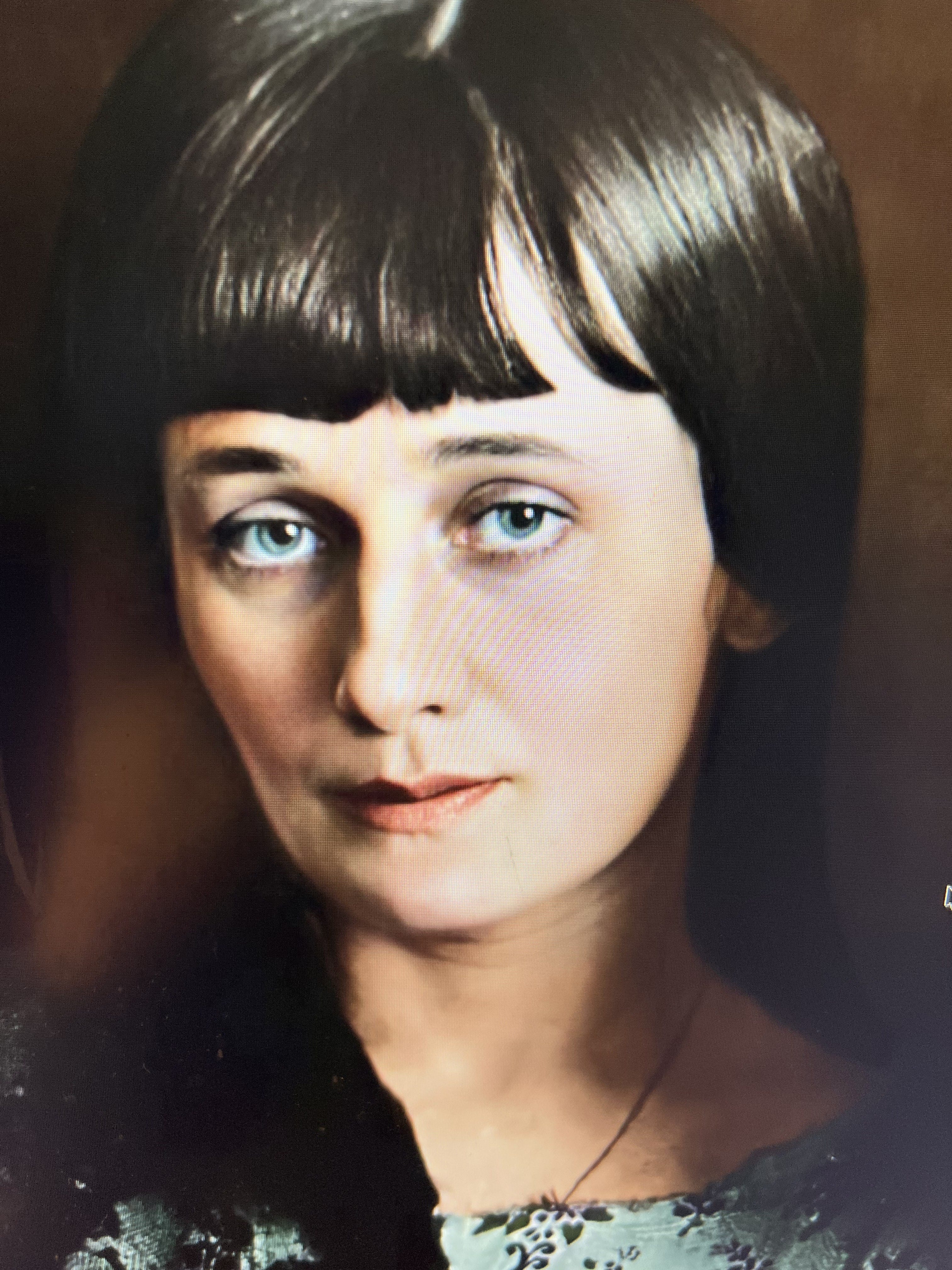
1936
But it was not the end of the troubles. Her son, Lev Gumiliov, was arrested four times: in 1930, 1933, 1935, and 1938. Punin was arrested for the third and last time in 1949, on denunciations by the President of the Academy of Art, A. Gerasimov, as a follower of abstractionism and cubism rather than social realism. In that year, 1949, she was also present during his arrest, as in 1935, but they had already parted and were not close. He died in one of the Komi Gulag camps in 1953.
In March 1938, her son, Lev Gumiliov, was arrested for the third time, and, standing in the long line with her food parcel for her son along the frozen stone walls of Kresty- old Peretsbutg prison, Akhmatova heard as a woman, with the blue from cold lips, as woken up from our stupor, asked me in my ear, we all talked in wispers then:
— Can you describe all this?
—I can, answered Akhmatova.
And, something, likeness of smile, slipped on what, a long time ago, was her face.
1 April 1957
This question-and-answer between the poet and the unknown woman became the Preface to the poem Requiem.
Standing in those endless lines during 17 months, in the freezing cold, or hot weather, or rain, she composed lines of her merciless poem, as was the merciless regime, which created this cruel situation.
From this time, Akhmatova continues to compose her tragic poem Requiem until 1940. It became a mass for all innocent prisoners and their mothers, wives, sisters, awaiting the sentencing of their loved ones to death or the Gulag. It sounded like a funereal ringing. At once, it became the verdict of the Soviet regime, to Stalin and his henchmen. It was published without the poet’s permission in Munich in 1963 and in Soviet Russia in 1987, near the end of the Soviet regime. Theme of the poem: mother’s grief and the tragedy of the country.
Poem composed of: Epigraph; Instead of Preface; Dedication; Introduction; 10 small chapters, and 2 parts of Epilogue.
Dedication to all women in the line, she met during those terrible 17 months:
… we are everywhere the same,
[We]*Hear only keys’ hateful gnashing
And soldiers’ heavy steps.
*********
[We]Raising as to early mass,
Walked by wild capital
There met, more lifeless than the dead,
I send them my farewell greetings.
March 1940
Introduction:
It was when only a dead smiled
Glad to its tranquility.
*********
Stars of death were standing over us,
And innocent Rus’* writhes with pain.
Part I [They] Took you away at dawn.
1935
III It is not me, it is someone else is suffering…
IV Would it be shown to you, a mocker
And darling of all your friends,
Tsar Village’s merry sinner
What happened with your life?
V I scream already seventeen months
Fling myself to the executioner’s feet.
You are my son and horror mine.
VII Sentence.
And the stone word fell down
On my still alive breast.
All right, I was ready,
I will cope somehow.
I have a lot to do today:
I need to kill my memory,
I need my soul to harden
I need to learn to live anew.
*******.
I felt this bright day and an empty home
A long time ago.
1939 Summer
X Crucifixion
And there, where the mother stood,
Nobody dared to look.
Epilogue (consists of two parts)
1. And I am praying not only about myself,
About all of them, who stood with me
And in the fierce cold, and in the July heat,
Under a red, blind wall.
Again, the funeral hour approached.
I see, I hear, I feel you all,
I want to name you all,
But the list was taken away…
Around 10 March 1940
(*Russian grammar does not use the personal pronouns or the verb “to be” when they are understood in the speech.
*Rus’ — ‘ indication of last consonant “s” to pronounce as a soft consonant.
The ancient name of Russia.
I gave only the small excerpts from her poem.
We have to remember that Russian versification is rhythmic and rhymic, and with such a hard poetry theme, Anna Akhmatova became a poet of genius.)
In this troubled time of her life, she finds herself in the hospital, and one day, a very handsome man comes to visit her and introduces himself as Dr. Garshin, a pathologist at the hospital who loves her poetry. He takes care of her nutrition, bringing her fresh food from home; he reads her stories; he spends all his free time with her. After she leaves the hospital, they continue to see each other. She is now free of these sorrowful lines at the Kresty, because Leva is sent to the Gulag for seven years, far away in the North, and she continues working on her poem, but only in her mind, without writing anything on paper. She was present at the arrest of her closest friend, Osip Mandelstam. On her first night in his and his wife Nadia's apartment in Moscow, NKVD agents came, made a pogrom of the apartment, trying to find the incriminating material - his verses against Stalin, but didn’t find it, and arrested him all the same.
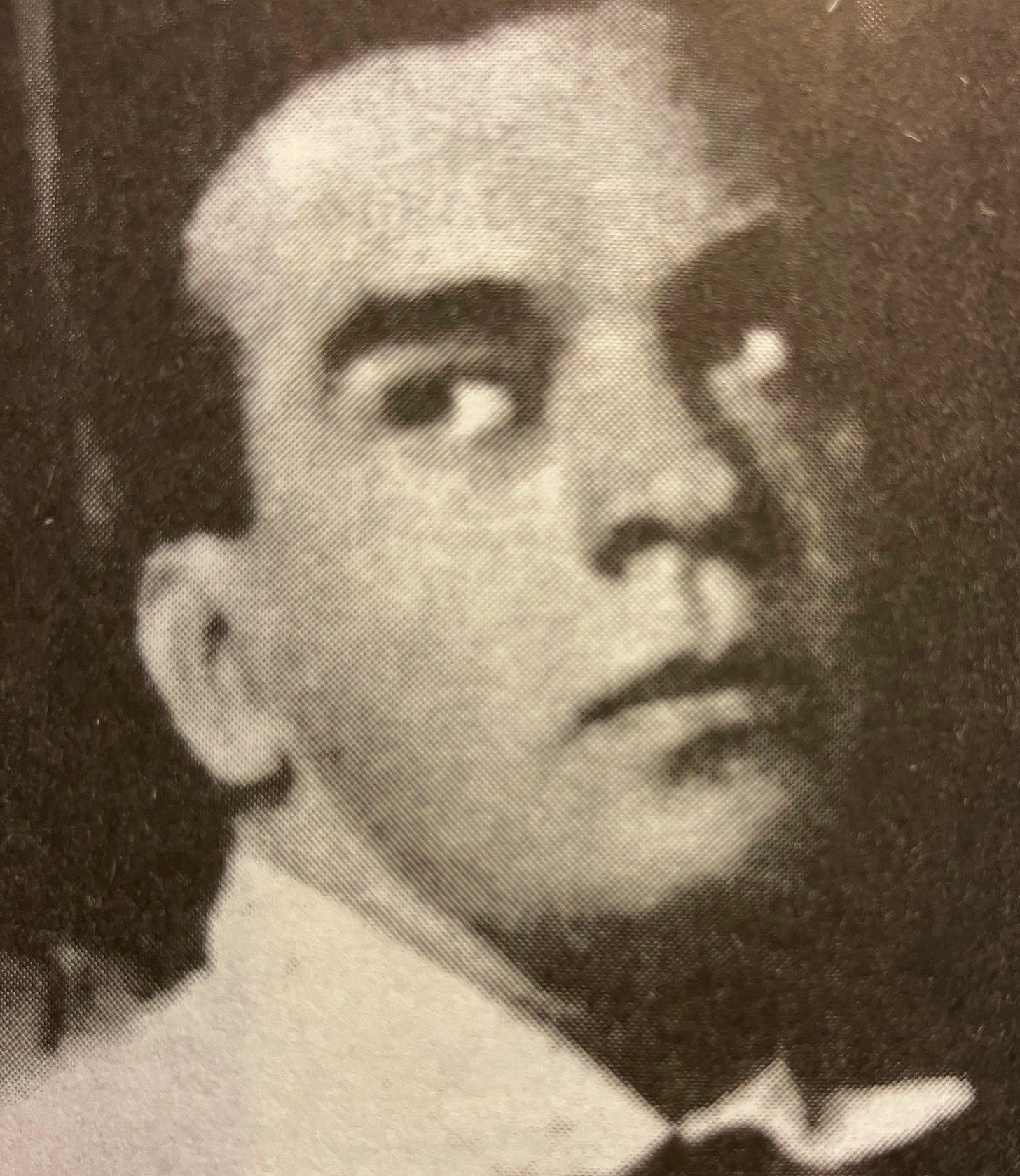
V. Garshin, 1936
In Leningrad, handsome Garshin is in love with her. He divorced his wife; fortunately, his sons are adults. He made his declaration of love to her, giving her a beautiful amethyst cameo of the woman’s head as a present. His name is famous in Russia. Everybody remembers Red Flower, the story of his uncle, Vsevolod Garshin, who committed suicide, still being rather young. This Garshin is a talented scientist, academic, and professor at the First Medical School. As she heard, all the female students were in love with this handsome man. She thinks that she deserves, at last, the man who loves her and is able to give her the lawful, respectable place in society. For both of them, it is their last romance. She is 49, and he is 50.
And it is already the year of 1941, the beginning of summer, June, the fantastic white nights.
PS. And we all know what happened in June of 1941.
I think this- and other fascinating, shuttering posts- should be widely read.
Thank you so much for this, Larisa
❤️❤️❤️
I thank Alex Rettie, Staney Wotrings, David Alexander, Konstantyn Dmitriiev, and I already thanked Kameron, Portia, and graywyvern for reading my 'shedevr', but as usual, my comment disappeared, as Moore, and 24 others.